How to Get Cited in Google AI Overviews
Google AI Overviews changed the unit of visibility. A page can rank, earn impressions, and still fail to become part of the generated answer. It can also be used as a source without your brand being named in the answer itself. At MetaFyAI, we've seen that for content teams, this means ranking, citation, and brand mention must be measured as three related but different outcomes.
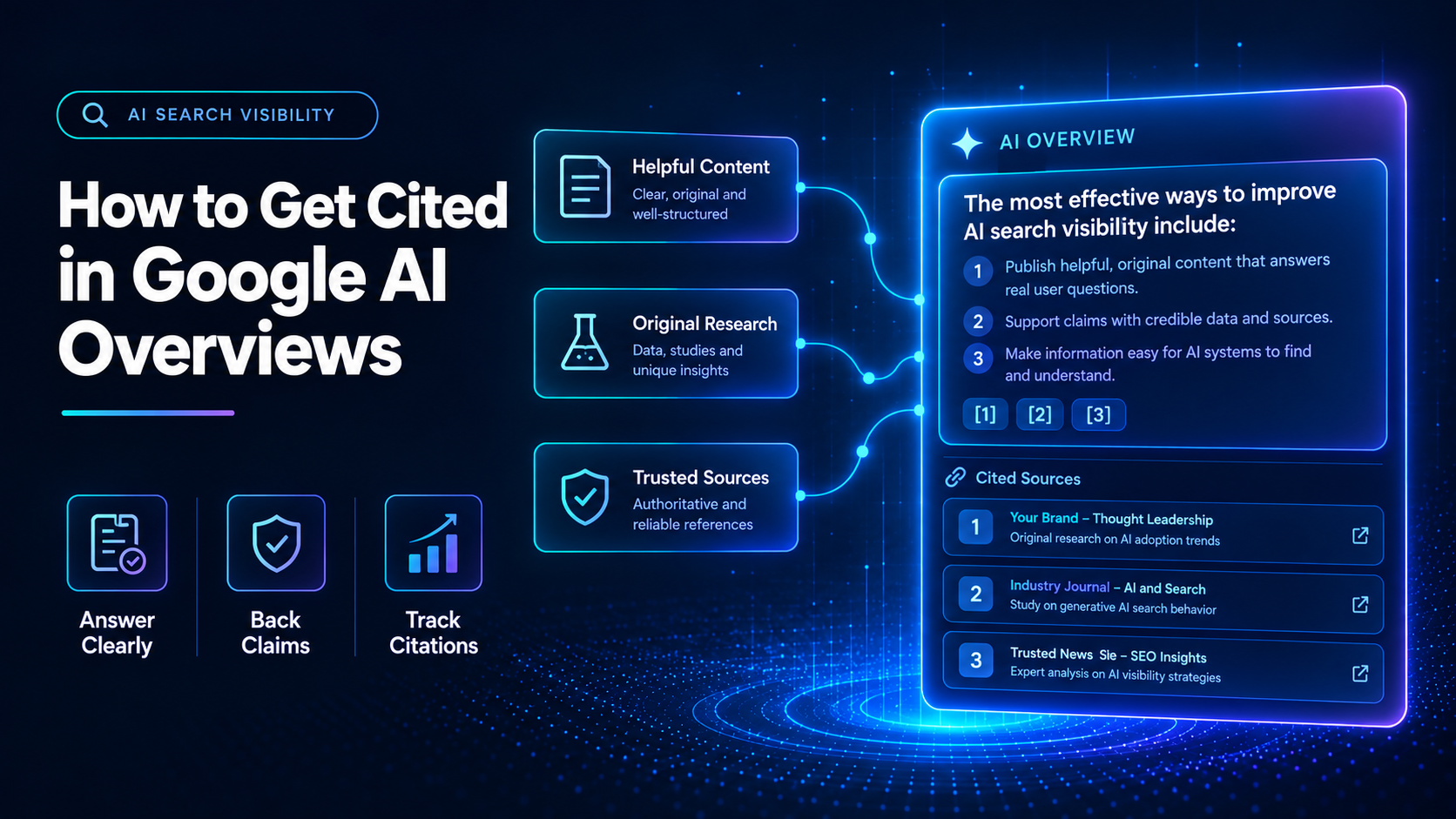
Key takeaway: You cannot force a Google AI Overview citation. You can improve your eligibility by publishing useful, original content, keeping strong SEO foundations, making important facts explicit, and measuring citations separately from rankings.
Start with what Google actually says
In May 2026, Google published dedicated guidance for generative AI features in Search. The message was deliberately unglamorous: SEO is still relevant. AI Overviews and AI Mode use Google’s core Search systems to retrieve useful, current pages, and Google says there are no special additional requirements for appearing in these experiences.
That rules out a common mistake: treating AEO as a separate collection of hacks. The better model is to keep the technical and editorial fundamentals of search, then add a stronger emphasis on answer quality, evidence, structure, and measurement.
A citation is not the same as a ranking or a mention
A 2026 Semrush study found that 61.7% of observed AI citations were “ghost citations”: the page appeared as a source, but the brand name did not appear in the generated answer. Across that dataset, citations were almost twice as common as brand mentions.
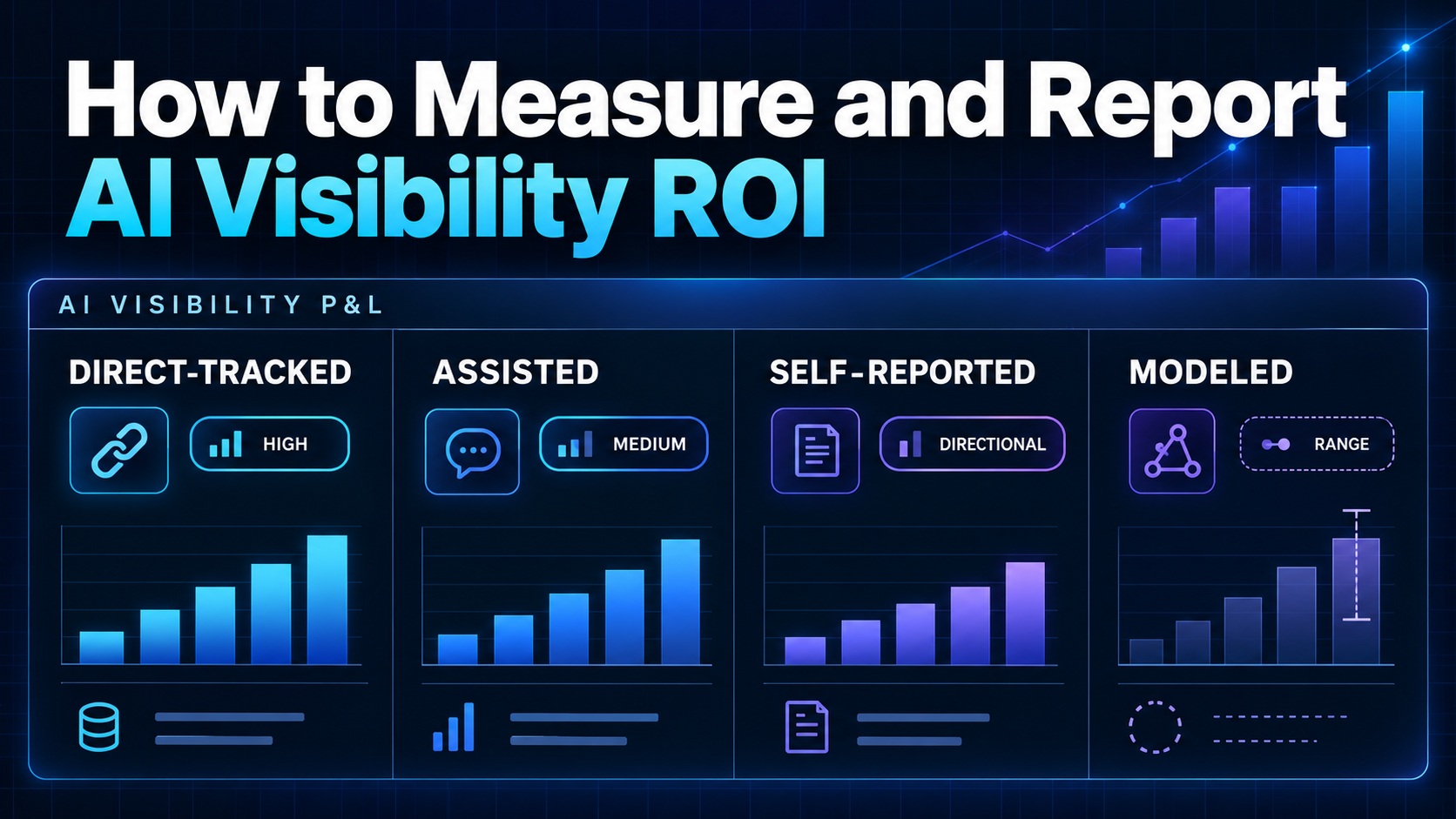
For marketers, the distinction matters. A citation can establish your page as source material. A brand mention makes the company visible in the answer. A recommendation goes further by putting the brand into the consideration set. One dashboard number should not collapse those outcomes.
1. Choose query clusters, not isolated keywords
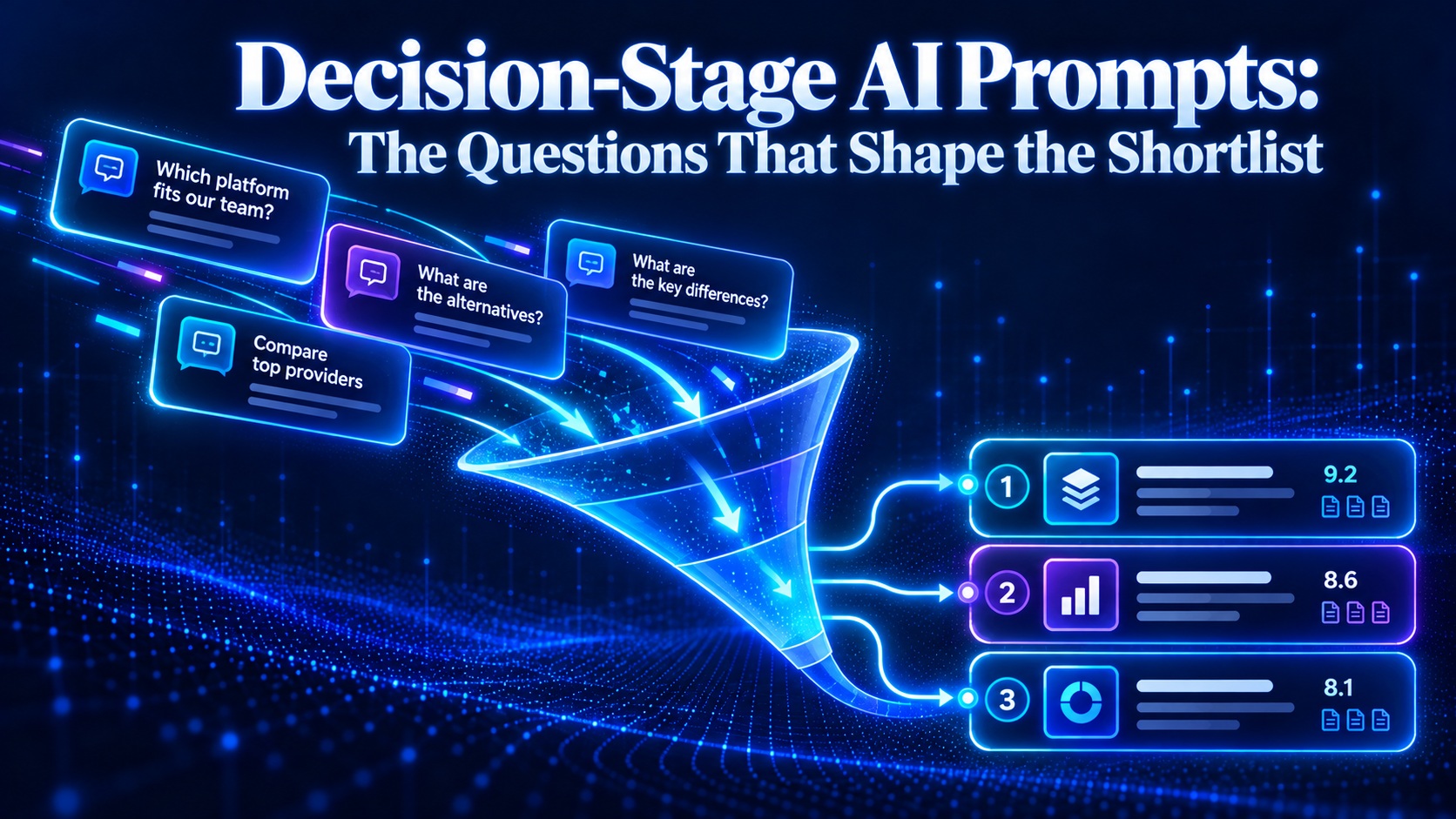
AI answers are generated from full questions, not just short head terms. Start with a cluster of buyer questions that share one intent for example, evaluation, implementation, comparison, or troubleshooting. Freeze that set before you optimize. If the questions keep changing, you will not know whether the content improved or the measurement instrument changed.
A useful cluster is narrow enough to represent one decision and broad enough to capture natural phrasing. The goal is not to create fifty near-duplicate pages. It is to understand the information needed behind the prompt and build one strong page that resolves it better than the alternatives.
2. Answer the question before you decorate the page
Many pages bury the answer beneath positioning language, long intros, or generic industry context. For AI retrieval, that creates unnecessary ambiguity. State the useful answer early, then earn the right to expand with evidence, examples, caveats, and next steps.
This does not mean every paragraph should be a snippet. It means each section should have a clear job. A reader, human or machine should be able to tell what question the section answers and which claims are supported.
3. Put proof next to the claim
Pages become easier to trust when important claims are traceable. Use original data when you have it. When you rely on outside evidence, link to the primary source. For product or company facts, state the information explicitly in visible text instead of assuming a crawler will infer it from imagery or slogans.
If a number matters, give it context: what was measured, when, and on what population. If a claim is directional rather than proven, say so. Clear limitations make a page more credible, not less.
4. Build structure for comprehension
Descriptive headings, concise paragraphs, tables, lists, and FAQs can make complex pages easier to parse. Use them when they help the reader understand the subject. Do not add markup or FAQ blocks simply because someone claims they are an AI citation shortcut.
Google’s own guidance emphasizes helpful, unique, non-commodity content and established SEO practices. Structured data still has value when it accurately describes what is visible on the page, but it should describe the content not substitute for it.
5. Strengthen the source ecosystem around the page
Your own site is only one part of the information environment an AI system can use. Industry publications, reviews, partner pages, communities, videos, and expert commentary can all shape how a topic or brand is represented.
That makes digital PR and editorial authority relevant to AEO. The objective is not manufactured mentions. It is to create something worth referencing: original research, a useful benchmark, a transparent methodology, a strong comparison, or an expert explanation that other sites have a reason to cite.
6. Measure citation rate directly
As of August 31, 2026, Google says its Search Generative AI performance reports are available worldwide in Search Console. That gives site owners a new first-party view of visibility in generative Search experiences.
For a broader AI visibility program, keep your own prompt-level baseline as well. Record whether your domain is cited, whether the brand is named, which competitors appear, and which URLs are used as sources. Then re-run the same cluster after a defined content change.
7. Keep a holdout when you want to claim causation
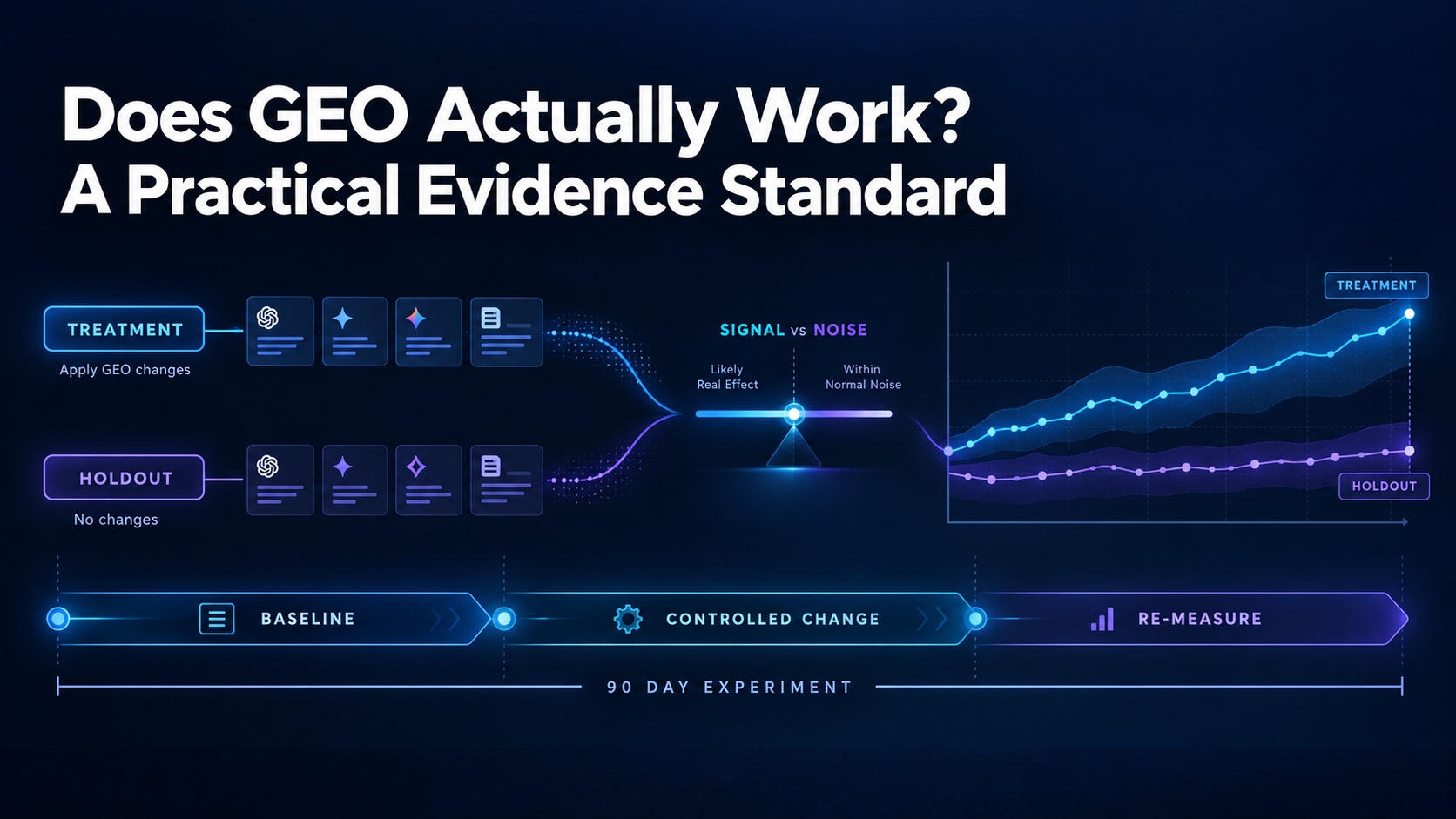
AI answers move for reasons you do not control: model changes, source freshness, competitor publishing, query wording, and normal response variation. A simple before-and-after screenshot is not enough to prove your edit caused the result.
If the stakes are high, keep a comparable group of pages or prompts unchanged. Improve one treatment group, leave the other alone, and compare the movement. You may still have uncertainty, but you have a much stronger basis for saying the intervention mattered.
What MetaFyAI adds to the process
MetaFyAI’s Prompt Intelligence is designed around the buyer questions a brand needs to win. Teams can review and monitor those questions, then inspect brand presence, competitor presence, responses, and citations at the prompt level.
The AI Visibility workflow connects those signals to the broader question: where is the brand visible, where is it missing, and which evidence should guide the next action?
That measurement loop is the useful part of AEO: define the questions, establish the baseline, improve the page, and re-measure. The goal is not to chase a single citation. It is to build a repeatable system for earning and understanding visibility.
AI Overview citation checklist
- The page resolves one clear search intent.
- The answer appears early in the relevant section.
- Important facts are explicit in visible text.
- Claims are supported with primary or authoritative evidence.
- The content adds something original: data, method, example, framework, or expert analysis.
- The page is crawlable, indexable, internally linked, and technically healthy.
- Structured data accurately reflects the visible content.
- The query cluster and baseline are recorded before optimization.
- Citation, mention, recommendation, and ranking are measured separately.
- The same query cluster is re-measured after the change.
Where to Start
Getting cited in Google AI Overviews is not a formatting contest. It is the result of being a useful source inside a system that still depends on core Search quality and retrieval. The brands that treat citation as a measurable outcome instead of a vague side effect of SEO will learn faster.
Start with the questions that matter. Make the answer better. Strengthen the evidence around it. Then, use MetaFyAI to measure whether your source actually entered the answer.
Review your AI visibility across the buyer questions that matter.
Frequently Asked Questions