


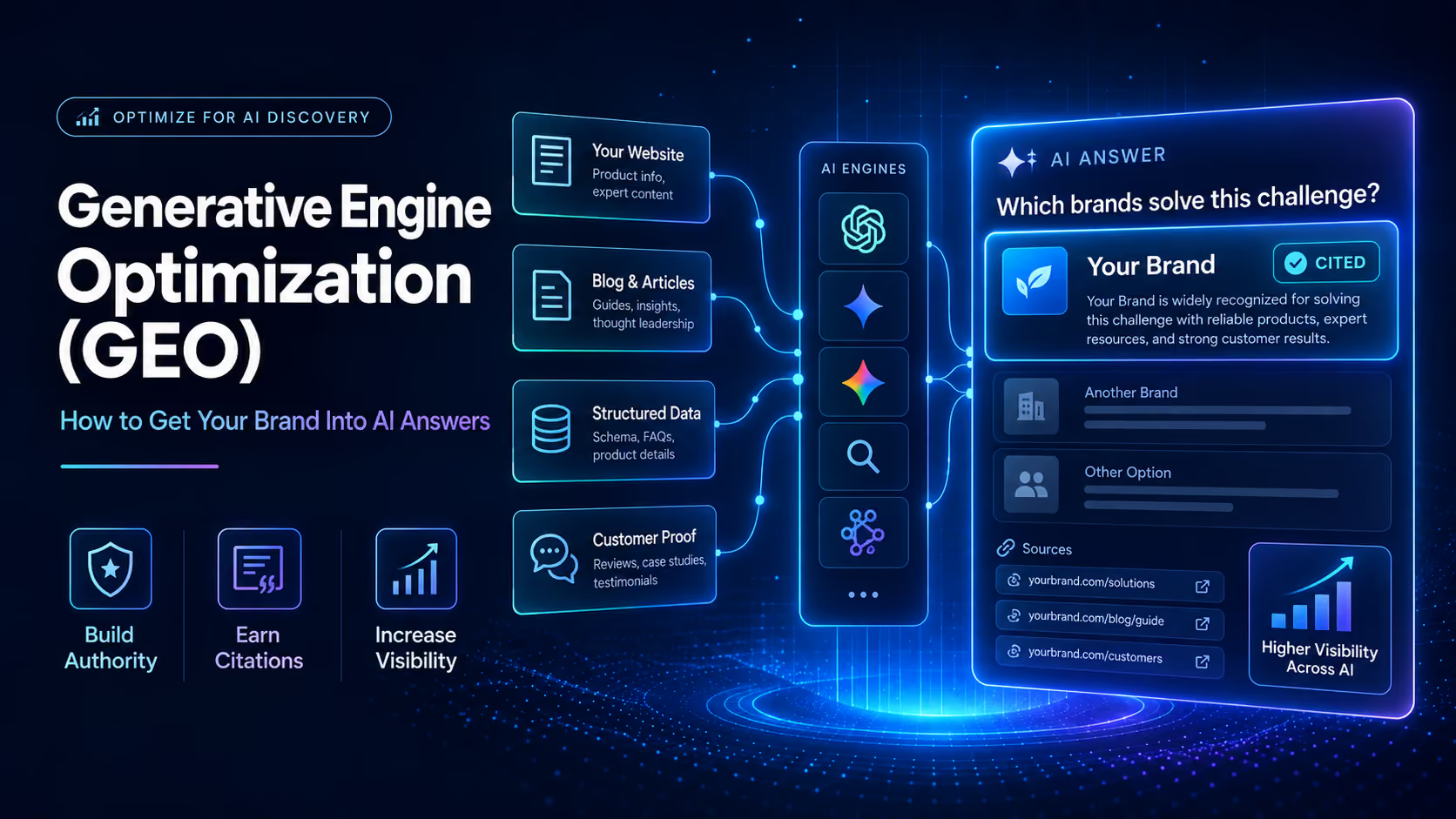
Generative Engine Optimization (GEO): How to Get Your Brand Into AI Answers
For twenty years, the goal of search marketing was a position on a results page. Rank higher, earn the click, measure the traffic.
That model is being reshaped. Buyers now open ChatGPT, Perplexity, Gemini, Claude, Microsoft Copilot, or Google AI Mode and ask a question in full sentences. What comes back is not ten blue links. It is a synthesized answer that names a handful of brands, recommends one or two, and quietly leaves everyone else out.
If your brand is not in that answer, the buyer may never learn you exist. There is no page two to be found on.
Generative Engine Optimization (GEO) is the discipline of making your brand, products, and expertise discoverable, understandable, and quotable to the AI systems that now generate those answers.
What Is Generative Engine Optimization?
Generative Engine Optimization is the practice of structuring content, product information, and supporting evidence so that generative AI systems can retrieve it, understand it, trust it, and include it in the answers they produce for real buyer questions.
You may also see it called:
- AEO — Answer Engine Optimization
- LLMO — Large Language Model Optimization
- AI SEO or AI search optimization
The terminology is still settling. The underlying objective is consistent: earn a place inside the answer, not just a place in an index.
Traditional SEO optimizes for a ranking algorithm that returns documents. GEO optimizes for a reasoning system that reads documents, synthesizes them, and makes a recommendation on the user's behalf.
GEO vs. SEO: What Actually Changes
GEO does not replace SEO. Most of the technical foundation carries over — a page that cannot be crawled cannot be cited. But the unit of measurement, the target, and the definition of success all shift.
That last row is the one that matters most. Search visibility degrades gradually. AI visibility tends to be binary — you are in the consideration set, or you are not in the conversation at all.
Why GEO Matters Now
Three shifts make this urgent rather than theoretical.
1. The answer has replaced the list
AI Overviews, AI Mode, and chat-based assistants resolve many queries without a click. Buyers accept a synthesized recommendation instead of evaluating ten results themselves.
2. Research is happening earlier and more privately
By the time a prospect reaches your website, an AI assistant may already have shaped their shortlist, framed the category, and told them which vendors are worth evaluating. Your first impression is increasingly made by a model, not by your homepage.
3. Your analytics will not warn you
A brand can be invisible across thousands of AI answers while its Search Console data looks stable. There is no impression count for a recommendation you never received. This is the quietest kind of pipeline loss — and the reason AI visibility needs its own measurement layer.
How Generative Engines Decide Which Brands to Include
No one outside the model providers has the full picture, and the systems change. But the observable patterns are consistent enough to plan around.
Notice how little of this is about keyword placement. GEO is closer to information architecture and reputation engineering than to classic on-page optimization.
The GEO Playbook: Seven Practical Moves
1. Build a prompt inventory, not a keyword list
Start from the questions your buyers actually ask an assistant: category discovery, comparisons, alternatives to competitors, industry fit, feature requirements, pricing considerations, and implementation concerns. This prompt set becomes both your content roadmap and your measurement baseline — so write it down and keep it stable.
2. Answer the question in the first two sentences
Generative systems reward passages that resolve a question cleanly. Lead each section with a direct, self-contained answer, then expand. Long preambles get skipped; definitions get quoted.
3. Make your entity unambiguous
State plainly what your company is, what category it belongs to, what it does, and who it is for — on your homepage, your about page, and your product pages. Keep that description identical across your site, directories, review platforms, and social profiles. Models reconcile conflicting descriptions by discarding the ambiguous ones.
4. Give products their own discoverable identity
A strong parent brand can mask weak product visibility. If buyers ask product-level or SKU-level questions, every product needs its own page with clear attributes, use cases, supported integrations, and differentiators written in plain language.
5. Structure the page for machines as well as humans
Descriptive headings, short paragraphs, comparison tables, defined terms, FAQ sections, and clean schema markup all make extraction easier. Content buried in images, PDFs, or JavaScript-only rendering is content an engine may never see.
6. Earn corroboration off your own domain
Models weigh what other credible sources say about you. Review platforms, industry publications, analyst coverage, documentation, partner pages, and community discussion all reinforce — or contradict — your positioning.
7. Own the comparison and alternative queries
"Best alternatives to [competitor]" and "[Competitor] vs [you]" are among the highest-intent prompts in any category. If you have no honest, substantive content on those questions, an engine will assemble an answer from whoever does.
How to Measure GEO
GEO work that is not measured tends to become guesswork. Traffic metrics will not capture it, so a separate set of indicators is required.
Two rules keep the numbers honest. Hold your prompt set and scoring rules constant so changes reflect reality rather than methodology. And always pair the score with the underlying answers — a percentage without evidence cannot tell you what to fix.
For a deeper treatment of the competitive side of this, see our guides to AI Share of Voice and ChatGPT Share of Voice.
Common GEO Mistakes
Publishing more content instead of clearer content
Volume does not fix an entity problem. If an engine cannot tell what you do, a hundred more blog posts will not change the answer.
Checking one prompt on one platform
Answers vary by wording, platform, and context. A single favorable result is anecdote, not measurement.
Reporting a brand-level score only
Healthy brand visibility routinely conceals products that never appear in high-intent answers.
Assuming any change caused the result
AI visibility moves because of your content, competitor activity, source changes, and model updates. Read the answers before assigning credit or blame.
Treating GEO as a one-time project
These systems update continuously. GEO is a measurement loop, not a launch.
How MetaFyAI Supports GEO
MetaFyAI is built for the part of GEO that is hardest to do manually: seeing what AI actually says about your brand, at scale, across platforms, and over time.
The workflow it enables is straightforward:
Measure → Diagnose → Optimize → Re-measure
Instead of reporting that AI visibility went down, teams can identify the prompt, the competitor, the missing product information, and the source that caused it.
Start With One Question
Before building a GEO program, run a single test. Take the five questions your best-fit buyers ask most often, put them into two or three AI assistants, and read the answers closely.
Are you mentioned? Are you recommended, or merely listed? Which competitor is named first, and what capability is attached to their name? Which products appear — and which of yours are missing?
Whatever you find is your baseline. Everything in GEO starts there.
See Where Your Brand Stands in AI Answers
Measure your visibility across AI platforms, find the prompts where competitors are winning, and turn those gaps into a prioritized optimization plan.
Frequently Asked Questions
.avif)
.avif)